Wednesday, April 21, 2010

Charles In Charge

               
Hawaii District 1 111th Congress as elected 4 November 2008


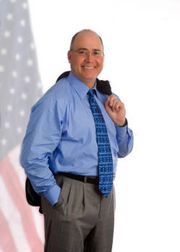
Charles Djou


Charles Djou is a Republican running for the vacant US House seat in Hawaii's first congressional District. The state Office of Elections called a Special Election for Saturday 22 May 2010 to fill this vacant seat. There is no primary. The candidate receiving the most votes in the Special Election will fill the remainder of Congressman Abercrombie's term which ends in January 2011. Actually ballots will be arriving at the state Office of Elections on May 1st because they are using mail-in ballots instead of voting sites to vote in this special election.

I encourage everyone who lives in this district to vote for Charles, and if you know someone else who lives in this district please encourage them to vote for Charles Djou. At first glance at the map it would appear the demographics of an urban Honolulu congressional district are just not good for a Republican. We really need to stop thinking like that. This particular House seat is winnable for Charles Djou because the constituents here see the same thing as everyone else sees. The Ds in Washington DC are not doing anything that is helpful to the folks living in Honolulu. More taxes are going to cause more damage to a tourist industry that is suffering enough already. Hawaiians live as far away as you can get in the US from Washington DC, and they do not want to have to give away more power to the federal government over how they live.

Jerry Burris wrote an interesting piece in the Honolulu Advertiser about this election. Here is an excerpt of it:
The intense interest of the national parties, most unusual for Hawai'i, is an indication of how close things are in Washington. One vote here or there can make a big difference. Republicans, particularly, are licking their chops because it would be a huge PR victory to win a GOP seat in a traditionally Democratic state and in the home state of President Obama, to boot.

Democrats are offering voters a nice choice between the generally more liberal Hanabusa and the somewhat more conservative Case. But this could be a problem, if the two split the vote (throw in another handful of votes going to other lesser-known candidates) and then Djou slips though the middle in this winner-take-all contest.

Watch for a more active presence by major Democratic figures, including Sens. Daniel Inouye and Dan Akaka, who have endorsed Hanabusa. Case, who doesn't have that kind of heavyweight backing, uses those endorsements to show he is not part of the "status quo."
It ain't over 'til it's over, so let's support Charles Djou

Saturday, April 17, 2010

Throw Da Bums Out...Or Not

There are a dozen sitting Republican US Senators running for re-election in 2010. As incumbents they have a built-in advantage of more money, more campaign support from Senate colleagues whose
term are not up this year, and more support from the RNC and the NRSC than any primary challenger will have. It comes as no surprise that incumbents almost never lose in a primary or in a general election. However tea-partiers have made enough noise already to make 2010 a different kind of election year.

I don't know if they will make enough of a difference to get any of these incumbents primaried, but I suspect they might. There are some who might think that it is as simple as electing in the primary the candidate with the best voting records that keep with the core principles of keeping the size and scope of the federal government limited, keeping the size and scope of the federal debt small, and keeping the size and scope of the federal taxes small. I wish it was that simple.

Everything starts with precinct committeemen. They are the folks who determine who are going to be slated for all local, state, and federal elections. The US Senators are supposed to be the
voice of their state, and to vote with the best interests of their states being their top priority. So you actually need to elect conservative Governors and state legislators if you want
the US Senators that are conservative.

It's true that many incumbent US Senators are not doing what they are supposed to be doing in terms of the best wishes of the Governor and state legislators from where they are elected. They get enamored with power and their measure of success is based on how many more people call them for help. A better measure of success would be based on how many more people are no longer in need of any help. The longer that a person serves as a US Senator the more prone they are to become remote and detached from their state and more enamored with personal power. I am only aware of two of these dozen even getting challenged in the primary, John McCain of AZ and Bob Bennett of UT. It is wrong to simply be against an incumbent senator if you have no challenger who you are for. Another thing to recognize is how difficult it is to have a very conservative senator from a state that has elected a very liberal governor and state legislators.

Here are the twelve incumbent Republican Senators running for reelection.

Bob Bennett

BENNETT, Robert, (1933 - ) Senate Years of Service: 1993-

Richard Burr

BURR, Richard M., (1955 - ) Senate Years of Service: 2005-


COBURN, Thomas Allen, (1948 - ) Senate Years of Service: 2005-

Mike Crapo

CRAPO, Michael Dean, (1951 - ) Senate Years of Service: 1999-

Jim DeMint

DeMINT, James W., (1951 - ) Senate Years of Service: 2005-

Chuck Grassley

GRASSLEY, Charles Ernest, (1933 - ) Senate Years of Service: 1981-

Johnny Isakson

ISAKSON, Johnny, (1944 - ) Senate Years of Service: 2005-

John McCain

McCAIN, John Sidney, III, (1936 - ) Senate Years of Service: 1987-

Lisa Murkowski

MURKOWSKI, Lisa, (1957 - ) Senate Years of Service: 2002-

Richard Shelby

SHELBY, Richard C., (1934 - ) Senate Years of Service: 1987-

John Thune

THUNE, John, (1961 - ) Senate Years of Service: 2005-

David Vitter

VITTER, David, (1961 - ) Senate Years of Service: 2005-

Tuesday, April 13, 2010

Are We Looking In The Wrong Places?

I know it is way way to early to start talking about who will be the Republican candidate in the 2012 General election. The most important elections are happening in 2010, and we need to win seats in the US Congress and win offices in the states this year. Having said that, right now is a very good time look toward a process of grooming excellent candidates to run in 2012. I do not think that we do a very good job of looking in the right places for our future leaders.


In universities an athletic director looks at winning programs to find new coaches. The Kentucky WildCats basketball program was never going to get a head coach that had not been a successful coach elsewhere. The Republican Party should be thinking like this when they consider a presidential candidate, but they do not. They look at individual qualities a person has of making speeches and getting news written about them by the MSM. They do not consider if they came from a place that has a winning program.


Let's take for example the latest straw poll that was taken at the SRLC. Here are the names and political places they worked.

Newt Gingrich District of Columbia

Mike Huckabee Arkansas

Gary Johnson New Mexico

Sarah Palin Alaska

Ron Paul District of Columbia

Tim Pawlenty Minnesota

Mike Pence District of Columbia

Mitt Romney Massachusetts

Rick Santorum District of Columbia


The list of nine people includes four from the place with the longest losing record, District of Columbia. The state of Alaska has the worst debt level in the US, Massachusetts has the second worst debt level, and New Mexico has the ninth worst debt level. Minnesota is not a state that people are rushing to live in.


Now before I suggest some names of people to groom, here is a list of successful states.


Utah

Arizona

Texas

Idaho

Wyoming

Nevada


I listed the fastest growing states in the US. Except for Texas, there are no sea ports and beaches luring people to move to these states. The states are attractive to people who do not want to pay high taxes and do not want to leave their children with high debts. A lot of people are waking up to realize the federal government needs to be going in a new direction where taxes and debts are not so high. Let's take each of these six states one at a time.


UTAH
Utah is fastest growing state with a 2.5% rate of increase.
It ranks 38th in debt and 35th in taxes. The Governor of Utah is Gary Herbert.
gary_herbert
Gary is a conservative Republican who received the highest ranking yet for a Utah Governor by a local conservative group, GrassRoots.


ARIZONA

Arizona is the second fastest growing state with a 2.3% rate of increase. It ranks 45th in debt and 40th in taxes. The State Treasurer of Arizona is Dean Martin.
Dean_Martin


Dean is a fiscal conservative Republican who recently said
Unfortunately today, government defines success by the number of people they're helping. That's a mistake. Success should be defined by the number of people who no longer need our help.


TEXAS
Texas is growing at a 2.0% rate of increase. It ranks 48th in debt and 32nd in taxes. The Governor of Texas is Rick Perry.
File-Rick_Perry_in_March_2010

Rick is a conservative Republican who recently had this to say in a speech to SRLC.
A fair tax structure, predictable regulatory structure, a legal system that doesn't allow oversuing and an accountable school system that yields skilled workers.
That's it. That's it. Then get out of the way and let the private sector do what the private sector does best. What is government's role? It's as the servant, not the master.


IDAHO

Idaho is growing at a 1.8% rate of increase. It ranks 37th in debt and 27th in taxes. The Governor of Idaho is Butch Otter.
File-ButchOtterOfficialCongressionalPortrait
Butch is a conservative Republican who became the first governor to sign into law a measure requiring the state attorney general to sue the federal government over any such insurance mandates.

After signing the law he said
What the Idaho Health Freedom Act says is that the citizens of our state won't be subject to another federal mandate or turn over another part of their life to government control.


WYOMING


Wyoming is growing at a 1.8% rate of increase. It ranks 32nd in debt and 25th in taxes. The Speaker of the Idaho House is Colin Simpson.
91c17f77-d2c9-572b-83be-dd445891f46e.preview-300

Colin recently had this to say when he announced his plan to run for Governor of Idaho.
I’m a financial conservative and understand the boom and bust cycles of Wyoming’s economy. I know the way to protect the state is to protect and build the financial reserves we’ve created.


Simpson said he would challenge the federal government’s use of the Endangered Species Act to block energy development in the state.


He said
there are ways to protect wildlife without hurting the energy industry.

NEVADA


Nevada is growing at a 1.8% rate of increase. It ranks 44th in debt and 39th in taxes. Former federal judge Brian Sandoval is running to become the next Governor of Nevada.
Brian Sandoval
He was asked by a reporter recently
What specific steps would you advocate to promote greater economic diversity and broadening of Nevada’s economic tax base?
The answer to promoting greater economic diversity and broadening Nevada’s economic tax base lies in keeping our tax climate attractive and our tax burden low. I think that most Nevadans would agree that our future depends on being a state where people want to do business. We have to be as good as or better than our competitors and that is especially true when it comes to economic development and diversification.

So now you have a different list of potential candidates for President than one normally sees. The only one on this list that has even been considered is Governor Rick Perry. It's OK because there still is plenty of time before we have to have a decision on a candidate. I just think we are doing it wrong when we only look at who is appearing on the Sunday morning talk shows and delivering speeches to decide. The most important factor is if the person has any experience in a winning program. All of the six people I have listed have experiences in winning programs for their state. Now we just need to apply the winning strategies that work for them at the federal level of leadership.

Friday, April 09, 2010

A Texas Six-Shooter and Florida Special Open Thread


Eddie Zamora


Rob Curnock


Jaimie Martinez


Quico Canseco


Jim Duerr


Steven Broden


Ed Lynch


These are maps of the US House congressional districts in Texas with a runoff election, and the US House congressional district with a special election. I provided the maps, photos, and names of the candidates that I want to see emerge victorious on Tuesday night April 13, 2010. All of these seven seats are currently held by incumbent Ds that I want voted out of office.

Wednesday, April 07, 2010

What shall we do with the capitalist?

Charles_Koch  File-Nancy_Pelosi  imgres
Charles Koch took over his father's moderately successful oil company, Rock Island Oil and Refining, in 1967 and over the next three decades transformed it into Koch Industries, a diversified petroleum products and trading company that, with an estimated $40 billion in annual revenues, is the second-largest privately held company in the United States. Koch companies include Flint Hills Refineries, which processed 600,000 barrels per day of crude oil in 2003; Koch Minerals, which traded about 20 million tons of mineral and fertilizer products in 2003; and Koch Ventures/Genesis, which invested nearly $185 million in technology-based startups between 1997 and 2003. Koch is known for his "Market-Based Management" (MBM) style of leadership, in which employees are encouraged to act as entrepreneurs within Koch Industries. He is also one of the leading contributors to conservative politicians and think tanks, having founded the prominent libertarian think tank the Cato Institute.


In the banquet hall of a hotel in San Francisco, he delivered a lecture.
What shall we do with the capitalist? Do nothing with us! Your doing with us has already played the mischief with us. Do nothing with us! If the apples will not remain on the tree of their own strength, if they are wormeaten at the core, if they are early ripe and disposed to fall, let them fall! I am not for tying or fastening them on the tree in any way, except by nature's plan, and if they will not stay there, let them fall. And if the capitalist cannot stand on his own legs, let him fall also. All I ask is, give him a chance to stand on his own legs! Let him alone! If you see him on his way to school, let him alone, don't disturb him! If you see him going to the dinner table at a hotel, let him go! If you see him going to the ballot- box, let him alone, don't disturb him! If you see him going into a work-shop, just let him alone,—your interference is doing him a positive injury. Speaker Pelosi's "preparation" is of a piece with this attempt to prop up the capitalist. Let him fall if he cannot stand alone! If the capitalist cannot live by the line of eternal justice, so beautifully pictured to you in the illustration used by Mr. Ayres, the fault will not be yours, it will be his who made the capitalist, and established that line for his government. Let him live or die by that. If you will only untie his hands, and give him a chance, I think he will live.


Actually this did not occur. I took part of a speech that Frederick Douglass delivered in 1865 at a meeting of the abolitionist society in Boston, MA. The only change I made is to replace the word Negro with the word capitalist. I also changed the abolitionist member names he addressed in his speech, politician Nathaniel Prentice Banks and radical Wendell Phillips, with Speaker Pelosi and radical Bill Ayres. I find it very interesting that the minor changes I made do not take away from the strong argument.

File-Frederick_Douglass_portrait  File-Nathaniel_Prentice_Banks_-_Brady-Handy  File-Wendell_Phillips_by_Brady

Thursday, April 01, 2010

Special Election in April - Why Not The General Election in April?


There is a special election on Tuesday April 13th, 2010 for the US House in Florida's District 19. This is not a primary, and the winner of this election will become a member of the US House. The Republican is Edward Lynch, and if you or anyone you know lives in this district, that is the most important piece of information you need. Vote for this guy with the (R) after his name to send the current leaders in Congress a message. Tell them if they don't care what you think about what they are doing, then you don't care to send anyone back to the House to vote to keep them in the leadership. It really is that simple, and it really doesn't matter how nice the man with (D) looks. He is not going to look so nice once he gets to the US Capitol, so just don't send him there.


Another important piece of advice is ignore anyone who advises you that your vote will not matter because there are more registered Ds than Rs in this district that always have elected a D for this seat. Don't allow them to discourage you from voting for Ed Lynch. For some encouragement about voting for Ed Lynch read this.


For the second part of my title ask yourself this question. What is the one day of the year, every year, when the government really gets in your face? The answer is April 15th. This is the one day you are required under penalty of law to file your taxes. I know in the past many folks have allowed the government to withhold extra money, and then they use e-file ASAP to file the tax return and get the refund of that extra money long before April 15th. That is in the past. With states like California unable to immediately send out refunds many now are nervous and less confident in having the government keep all that extra money for them like they used to. If the general election was held on the 2nd Tuesday in April it would fall on the 8th thru the 14th day right before the day you must file your taxes. I believe the close proximity of the general election day to tax day would have an impact on the mood and engagement of folks to go out and vote.


While Ds simply ignore the US Constitution, I chose to actually check what is now written in there about elections. I also checked what is in the US Code for statutes on the subject. I am more concerned with avoiding any needs for additional amendment to the Constitution to implement the change. From what I have found I believe no amendments are necessary.


U.S. Constitution - Article 2 Section 1
The executive Power shall be vested in a President of the United States of America. He shall hold his Office during the Term of four Years, and, together with the Vice-President chosen for the same Term, be elected, as follows:


Each State shall appoint, in such Manner as the Legislature thereof may direct, a Number of Electors, equal to the whole Number of Senators and Representatives to which the State may be entitled in the Congress: but no Senator or Representative, or Person holding an Office of Trust or Profit under the United States, shall be appointed an Elector.


The Congress may determine the Time of choosing the Electors, and the Day on which they shall give their Votes; which Day shall be the same throughout the United States.


No person except a natural born Citizen, or a Citizen of the United States, at the time of the Adoption of this Constitution, shall be eligible to the Office of President; neither shall any Person be eligible to that Office who shall not have attained to the Age of thirty-five Years, and been fourteen Years a Resident within the United States.


The President shall, at stated Times, receive for his Services, a Compensation, which shall neither be increased nor diminished during the Period for which he shall have been elected, and he shall not receive within that Period any other Emolument from the United States, or any of them.


Before he enter on the Execution of his Office, he shall take the following Oath or Affirmation:


"I do solemnly swear (or affirm) that I will faithfully execute the Office of President of the United States, and will to the best of my Ability, preserve, protect and defend the Constitution of the United States."


U.S. Constitution - Amendment 12
The Electors shall meet in their respective states, and vote by ballot for President and Vice-President, one of whom, at least, shall not be an inhabitant of the same state with themselves; they shall name in their ballots the person voted for as President, and in distinct ballots the person voted for as Vice-President, and they shall make distinct lists of all persons voted for as President, and of all persons voted for as Vice-President and of the number of votes for each, which lists they shall sign and certify, and transmit sealed to the seat of the government of the United States, directed to the President of the Senate;


The President of the Senate shall, in the presence of the Senate and House of Representatives, open all the certificates and the votes shall then be counted;


The person having the greatest Number of votes for President, shall be the President, if such number be a majority of the whole number of Electors appointed; and if no person have such majority, then from the persons having the highest numbers not exceeding three on the list of those voted for as President, the House of Representatives shall choose immediately, by ballot, the President. But in choosing the President, the votes shall be taken by states, the representation from each state having one vote; a quorum for this purpose shall consist of a member or members from two-thirds of the states, and a majority of all the states shall be necessary to a choice. And if the House of Representatives shall not choose a President whenever the right of choice shall devolve upon them, before the fourth day of March next following, then the Vice-President shall act as President, as in the case of the death or other constitutional disability of the President.


The person having the greatest number of votes as Vice-President, shall be the Vice-President, if such number be a majority of the whole number of Electors appointed, and if no person have a majority, then from the two highest numbers on the list, the Senate shall choose the Vice-President; a quorum for the purpose shall consist of two-thirds of the whole number of Senators, and a majority of the whole number shall be necessary to a choice. But no person constitutionally ineligible to the office of President shall be eligible to that of Vice-President of the United States.


U.S. Constitution - Amendment 20

1. The terms of the President and Vice President shall end at noon on the 20th day of January, and the terms of Senators and Representatives at noon on the 3d day of January, of the years in which such terms would have ended if this article had not been ratified; and the terms of their successors shall then begin.


2. The Congress shall assemble at least once in every year, and such meeting shall begin at noon on the 3d day of January, unless they shall by law appoint a different day.


3. If, at the time fixed for the beginning of the term of the President, the President elect shall have died, the Vice President elect shall become President. If a President shall not have been chosen before the time fixed for the beginning of his term, or if the President elect shall have failed to qualify, then the Vice President elect shall act as President until a President shall have qualified; and the Congress may by law provide for the case wherein neither a President elect nor a Vice President elect shall have qualified, declaring who shall then act as President, or the manner in which one who is to act shall be selected, and such person shall act accordingly until a President or Vice President shall have qualified.


4. The Congress may by law provide for the case of the death of any of the persons from whom the House of Representatives may choose a President whenever the right of choice shall have devolved upon them, and for the case of the death of any of the persons from whom the Senate may choose a Vice President whenever the right of choice shall have devolved upon them.


5. Sections 1 and 2 shall take effect on the 15th day of October following the ratification of this article.


6. This article shall be inoperative unless it shall have been ratified as an amendment to the Constitution by the legislatures of three-fourths of the several States within seven years from the date of its submission.


US Code Title 3 Chapter 1 Sec. 7. Meeting and vote of electors

The electors of President and Vice President of each State shall meet and give their votes on the first Monday after the second Wednesday in December next following their appointment at such place in each State as the legislature of such State shall direct.


(June 25, 1948, ch. 644, 62 Stat. 673.)


Bills and Resolutions, House of Representatives, 28th Congress, 2nd Session, Read, and committed to the Committee of the Whole House on the state of the Union. Mr. Duncan, by leave of the House, introduced H.R.432: A Bill To establish a uniform time for holding elections for electors of President and Vice President in all the States of the Union.


December 4, 1844


H.R.432 initially set the national day for choosing presidential Electors on "the first Tuesday in November," in years divisible by four (1848, 1852, etc.). But it was pointed out that in some years the period between the first Tuesday in November and the first Wednesday in December (when the Electoral College met) would be more than 34 days, in violation of the existing Electoral College law. So, the bill was amended to move the national date for choosing presidential Electors forward to the Tuesday after the first Monday in November, a date scheme already used in the state of New York.


So you can see how one member of the House can introduce a bill to establish a uniform time for holding the general election as well as the time for the electoral college. One thing that may look at first blush like a problem could actually be an improvement. The date for the term in office to expire is noon on January 20th for President and Vice-President and noon on January 3rd for members of Congress. So a newly elected President and Vice-President will have 8 months, and newly elected members of Congress will have 7.5 months to transition into office from the general election held on the 2nd Tuesday in April. This extra time in transition will be an improvement if they are smart enough to get A Chance to organize the new operations. (pun intended)


There are a lot of National Political Party Leaders and current officeholders in Washington DC who will not like a general election so close to Tax Day at all. Tough. It hurts to be you. Instead of getting depressed over the messes they have already gotten us into, we need to stay focused on electing a new crop and putting the old timers out to pasture. As Larry the Cable Guy says...
GET ER DONE.

Wednesday, March 24, 2010

A Huge Entitlement Was Repealed in America Once

There has been a lot of feelings of doom and gloom lately among conservatives after the health bill that was passed by the Congress and signed by the President. People think that since it is a new entitlement this will never go away. All entitlements have grown and expanded. Entitlements are here forever, because once people start receiving a benefit they will never give it up. This is simply not an historical fact. A huge entitlement was repealed in America once. This is an entitlement that existed even when we were colonies. Just like today, these entitled folks were very concerned about health care, education, and protecting the environment.

The entitled had to have complete control over how and how much medical care and education were delivered. They had to have a lot of individual mandates with respect to not having guns get into the wrong hands, and not having outside agitators have contacts and influence that might disturb the existing environment. There was an important need for the entitled to be convincing in explaining the limits of just how much one can improve their station in life, and any limited improvement is completely dependent on how loyal, faithful, and respectful that one is.

Promiscuous sex was not discouraged, and increases in population were welcomed instead of discouraged. The strong family ties were found to be a problem, and it was better for maintaining a discipline and devotion to the work to have families split apart.

There were moderate politicians during this period that tried to reach across the aisle and make compromises over where the entitled folks could live and operate. There were factory owners in states where the people strongly opposed and banned the entitlment, but these owners did not object to the raw materials the entitled people were providing them. These factory owners wanted the materials, and worried they would drop off with any changes to the system.

Legal challenges were made to this entitlement that went all the way to the Supreme Court, and the decisions rendered by the Supreme Court did not repeal this huge entitlement program. A major political party was created by people who opposed this entitlement.

I think by now most of you know what I am talking about, and there are certainly new wrinkles and nuances in entitlement programs today compared to this earlier entitlement. The entitled were private citizens then, and they are public elected officials now. The entitled lived in a mansion then, and they occupy a federal building now. The descendants of those held captive then are willingly and voluntarily giving up liberty for goods and services they don't have to pay for now. The descendants of those held captive then are told by the entitled now that there are rich conservative over-achievers who will be in bondage to paying the money they will not receive for their labors so that they can give out all the goods and services they have promised to them.

THE ENTITLED THEN
justinlamottescarlett2

THE ENTITLED NOW
hags

THE PLANTATION THEN
pix1

THE PLANTATION NOW
281721387_35203b779e

THE SLAVES THEN
antebellum_cotton_picking2

THE SLAVES NOW
bankers_art_257_20090211123738

One final meme to dispel is that idea that our elected leaders do not hear us. This is also simply not true. They have not only heard, but they have replied.

...we have always been and I believe continue to be, in
too many ways, essentially a nation of cowards.
Eric Holder
A.G.

BIG EFFING DEAL.
Joe Biden V.P.

I WON.
Barack Obama Pres.


I hope the repeal now is not as bloody and violent as the repeal then. It was a big problem then the entitled were private citizens who had lived on their private land and built an economic system around their entitlement. It is less of a problem now that the entitled are public officials who are occupying public buildings. We can vote them out of office, and we must.

Sunday, March 07, 2010

Will, Reich, Daniels, and Health Insurers

George Will, Mitch Daniels, and Robert Reich have all spoken and written recently about the health insurance debate. It reminds me a little bit of three blind men and an elephant. One touches the elephant's foreleg, another touches the elephant's tail, and the third one touches the elephant's trunk. They each can write truthfully about what an elephant is really like to them, and yet the actual elephant is a lot more complicated.

Let's start with George Will who
recently wrote a column, That rock in the
health-care road? It's called the Constitution
. an excerpt:
Would it be constitutional for the government to legislate compulsory calisthenics for all Americans? If not, why not? If it would be, in what sense does the nation still have constitutional, meaning limited, government?

Supporters of the mandate say Congress can impose the legislation under the enumerated power to regulate interstate commerce. Since the New Deal, courts have made this power capacious enough to include regulating intrastate activity that "substantially affects" interstate commerce.

But if any activity, or inactivity, can be declared to have economic consequences, then anything can be regulated or required. Furthermore, judicial review and the Constitution itself is largely nullified by a doctrine of virtually unlimited judicial deference to Congress's estimates of what is "necessary and proper" for the regulation of commerce.

George Will makes an additional argument in another column, A divided brain in Washington. an excerpt:
Obama's leitmotif is: Washington is disappointing, Washington is annoying, Washington is dysfunctional, Washington is corrupt, verily Washington is toxic yet Washington should conscript a substantially larger share of GDP, and Washington should exercise vast new controls over health care, energy, K-12 education, etc. Talk about a divided brain.

I like what Will is saying about the slippery slope of growing the government way too much based on Congress's estimates of what is "necessary and proper" for the regulation of commerce. I also appreciate the truth in what he says about a divided brain about claiming that something is broken and therefore should exercise vast new controls over health care. What I find missing in George Will's writings is an acknowledgement that a few health insurance companies do get their way with state legislators and insurance commissioners. These companies have even been known to press states to limit how many other health insurers they license. If he acknowledges this, then he can accept that Congressional oversight is needed under the enumerated power to regulate interstate commerce to undo these abuses.

Next we have Robert Reich who recently wrote a column, Bust Up the Health Insurance Trusts. an excerpt:
They were created in part by hospitals to spread the costs of expensive new equipment and facilities over many policy holders. Collaboration was the point, not competition. The 1945 McCarran-Ferguson Act made it official, exempting insurers from antitrust scrutiny and giving states the power to regulate them, although not necessarily any power to regulate rates.

With size has come not only market power but political clout. Big for-profit insurers deploy enough campaign money and lobbyists to get their way with state legislators and insurance commissioners. A proposal last year to allow California's Department of Insurance to regulate rates, for example, died in committee. These companies have even been known to press states to limit how many other health insurers they license.

And when they can’t get their way, insurers go to court. In Maine, one state that aggressively regulates rates, WellPoint's Anthem subsidiary has sued the insurance superintendent for reducing its requested rate increase.

Antitrust is no substitute for broader health care reform, but it's an important prerequisite. If a handful of giant health insurers are allowed to dominate the industry, many of the other aspects of reform (establishing insurance exchanges, requiring people to have insurance, even allowing consumers to buy insurance across state lines) won’t bring down the price of insurance.

Reich provides a somewhat correct history, but I do not appreciate his use of big, for-profit, and giant as adjectives to cast insurance companies in a negative light. Insurers do not get their way with state politicians writing regulations to limit other insurers because they are big, giant, and for-profit. They do it because it costs less money to pay off state politicians than to compete for customers in a large market. Another solution that Reich gets wrong is the idea that the federal government must set the minimum standards for all the insurers because the customers are not smart enough to purchase what they can afford and need.

Finally Gov. Mitch Daniels recently wrote a column, Hoosiers and Health Savings Accounts. an excerpt:
In Indiana's HSA, the state deposits $2,750 per year into an account controlled by the employee, out of which he pays all his health bills. Indiana covers the premium for the plan. The intent is that participants will become more cost-conscious and careful about overpayment or overutilization.

Everything in that excerpt is true. There are things that are not mentioned in this column about the state of Indiana HSA plan that are also true. The $2,750 per year from the state is not deposited until the employee has deposited $2,750 of his own money into the account. An employee will pay all his health bills out of the HSA account, and then pay health bills out of one of his personal accounts if prescription drugs, doctor visits, and medical tests early in the year deplete the money in the HSA account toward the end of the year. The state of Indiana HSA plan for state employees is an excellent plan for some people but not for everyone.

Health insurance is complicated, and some folks may strongly disagree with my ideas more than any disagreement they might have with Will, Reich, and Daniels. Nevertheless I will offer some of my own ideas about health insurance, and try to defend them against any criticism.

I think the US Congress should provide oversight as one of its enumerated powers to regulate interstate commerce and remove the antitrust exemption for health insurers. The US Congress should require states to allow competition from health insurers across state boundaries. The state insurance commissioners and state legislators should limit the rules and regulations to insurers that only require them to meet the same better business practices required of all other businesses.

The US Congress should create a special high risk health insurance pool for folks who live in federal districts and federal territories and are not able to obtain health insurance from any other insurers. Folks must provide a written proof of being denied coverage and proof of residence in a federal district or territory to qualify. A federal tax on transactions occurring in the federal districts and territories will fund it.

Ten regional districts should be created to manage high risk health insurance pools for folks who live in the state of the region and are not able to obtain health insurance from any other insurers. Folks must provide a written proof of being denied coverage and proof of residence in a state within the region to qualify. States in the regional districts will each provide money to fund it.

The increased competition and relaxation of regulations should increase the number of different plans a customer can choose between which will in turn increase the number of people who choose to buy an insurance policy. I do not think any individual should be forced into buying health insurance. There should be oversight and record-keeping of folks going to emergency rooms with no health insurance.

For me a baker and health insurer should both let the free market determine what ingredients are in their products, how much to charge, and how much profit they acquire. The only role I want for government is to have the oversight of a referee and keep somebody from using political clout instead of the market to pick winners and losers.

Wednesday, March 03, 2010

2010 US House Pickups in Texas

Texas has 32 House seats, and 12 of these are currently held by a D. There will be a run-off GOP primary on April 13th for six of these twelve. We have a name for a GOP candidate in the 2010 general election for the other six seats. Below is a table where I list these House seats and order them by what I consider the degree of difficulty in winning from least difficult to most difficult. I'd love to see the Rs pick up all 12 of them, but that is not realistic. If the Texas Republicans can unite after the April 13 run-off primary behind the winners I truly believe four of those candidates could defeat the incumbent in the general election.

I've only lived in Texas since September of 2009, and I expect a lot of posters that are more informed than I am can correct any errors in my analysis. No matter what district a voter lives in he needs to remember the first vote any D takes is a vote for Nancy Pelosi as speaker. That fact alone should make anyone hesitant to vote for a D for House in 2010.

House CD Incumbent 2008 vote pct Challenger
CD 17 Chet Edwards 53.0 % TBD
CD 23 Ciro D. Rodriguez 55.8 % TBD
CD 27 Solomon P. Ortiz 58.0 % TBD
CD 15 Ruben E. Hinojosa 65.7 % TBD
CD 25 Lloyd Doggett 65.8 % Donna Campbell
CD 28 Henry Cuellar 68.7 % Bryan Underwood
CD 20 Charles A. Gonzalez 71.9 % TBD
CD 29 Gene Green 74.6 % Roy Morales
CD 18 Sheila Jackson-Lee 77.3 % John Faulk
CD 16 Silvestre Reyes 82.1 % Tim Besco
CD 30 Eddie Bernice Johnson 82.5 % TBD
CD 9 Al Green 93.6 % Steve Mueller

Tuesday, February 23, 2010

The Wizard to the Cowardly Lion


You, my friend, are a victim of disorganized thinking. You are under the unfortunate impression that just because you run away you have no courage; you're confusing courage with wisdom.
--The Wizard to the Cowardly Lion


There are different types of wisdom. One of them, conventional wisdom, can sometimes be neither wise nor conventional. I am not saying that the four-term Senator from Arizona is a wizard or that the one term senator from South Carolina is a cowardly lion. I guess I just used the quote because the wizard of Oz used "my friend", an annoying phrase used often by John McCain.


The reason for writing this diary about these two Senators running for re-election in 2010 has nothing to do with the horse-race aspect of the election. As much as I detest McCain and admire DeMint both of them are going to be re-elected. My reason for writing this diary is to focus on the money that these two men have raised for other people in 2010. Winning support for a position of leadership has a lot to do with how much campaign support you have provided to your colleagues. John McCain has a PAC, Country First, that has contributed to four candidates for the US Senate. Jim DeMint has two PACS, MINT and Senate Conservatives Fund. The tables below indicate the names of the recipients, and the amount of dollars they received. The Florida US contest is extremely important for determining if Sen. DeMint is rising in the US Senate and Sen. McCain is dropping in the leadership department.


The real comparison between these two men is a choice between having leadership that is authoritarian and progressive (McCain) or libertarian and conservative (DeMint). I am personally rooting for the latter.

The early 20th century progressives were authoritarian in prohibiting booze, and the early 21st century progressives are authoritarian in prohibiting lobbiests campaigning, and consumers buying incandescent light bulbs. As a progressive they know they are smarter and must decide for all of the rest of us what is in our best interest. They lost the argument with the passage of the 21st amendment then, and they are losing the argument incrementally with Supreme Court decisions now. We always need to remain vigilant against these authoritarians. They may go off and hide for a while, but they will be back when they think they see an opening.


I recently watched the movie, Fountainhead. I recommend this movie especially two main characters, Ellsworth Toohey and Howard Roark, for showing the authoritarian progressive vs the conservative libertarian. a Cliff-Notes excerpt:


Toohey knows that a Fascist or Communist state requires a citizenry willing to obey. He can establish a dictatorship only if the majority of individuals are willing to give up personal autonomy - to surrender their minds to a leader. This is the two-pronged goal that he attempts to reach: destroy the independent thinkers like Roark, and, by convincing individuals to surrender their judgment and values, turn them into followers like Keating. A dictator requires a flock of sheep; he cannot hold power over a citizenry of independent men.


Toohey has a clear vision of his role in the collectivist state. He himself is not the brute of physical force who gains dominance by unleashing a reign of terror. His role, rather, is to be the intellectual advisor behind the throne. The brute will hold physical power over the masses, and Toohey will hold spiritual power over the brute. Toohey is a behind-the-scenes puppet master, who surreptitiously wields the real power - and this will be his place in the totalitarian state he seeks.

source


Country First PAC John McCain

Senate Candidates

Amount

Crist, Charles J Jr (R-FL)

$5,000

Portman, Rob (R-OH)

$7,400

Thune, John (R-SD)

$5,000

Coburn, Tom (R-OK)

$2,400


MINT PAC Jim DeMint

Senate Candidates

Amount

Thune, John (R-SD)

$5,000

Burr, Richard (R-NC)

$5,000

Isakson, Johnny (R-GA)

$5,000


Senate Conservatives Fund Jim DeMint


Senate Candidate

Amount

Rubio, Marco (R-FL)

$10,000